Showing posts with label 2011 Events. Show all posts

Saturday, 17 September 2011

ALIA Sydney Presents: From Little Things Big Things Grow: preparing to present and write a paper


It's conference season with the ALIA New Librarians Symposium and Library Technicians Conference both happening this month and the ALIA Biennial have already released their call for abstracts for next year's conference in Sydney. 


Have you thought you would like to present a paper at a conference? 


But don't know where to start? 


Or maybe you've done it before but would like to brush up your skills and get some insiders tips? 


Well, the latest ALIA Sydney event is here to help you get your hands dirty and start to grow your little ideas into big ones. 


This half day workshop is to help you develop confidence and learn some tips and tricks about how to put together a conference paper covering everything from pitching the idea to your manager, submitting an abstract, working with colleagues and brushing up your presentations skills. The workshop will also explore writing a small piece for a professional publication such as inCite as this can be great way to hone sharing your ideas. 


Featuring guest presenters: 


Janet Fletcher (Director, Information Services Department, UNSW and Co-Convenor for the ALIA 2012 Biennial) 


Alyson Dalby (InSync Surveys and former Co-Convenor ALIA New Librarians Symposium) 


Room 209, UNSW Library, University of New South Wales
1 - 5pm Saturday 15th October 2011  
ALIA Members $15 and Non-Members $20


RSVPs are essential so please email your details to aliasydneygroup@gmail.com 


Monday, 5 September 2011

ALIA Biennial Call for Abstracts Now Open

With a little whisper the team from the ALIA Biennial have released their call for abstracts. You can see all the details over at http://conferences.alia.org.au/alia2012/program.html 


If you aren't sure how to get started: stay tuned... help is on the way! 

Monday, 15 August 2011

ALIA Sydney Presents: Think Outside the Green


A sustainable library in Villanueva, Columbia as spotlighted at:http://www.treehugger.com/files/2011/02/stunning-library-in-tropical-columbia-has-permeable-rock-and-wood-walls.php
Do you hear the words climate change and wonder what you and your workplace can really do to help? Sustainability is about so much more than just recycling and turning off the lights! Join us for a lively night of discussion about what sustainability means for us, our libraries and our communities. Special guest speakers (to be announced) will share their experiences and help brainstorm practical things we can do now to make sure we create a sustainable future.

Numbers are limited so please RSVP to aliasydneygroup@gmail.com to ensure you don’t miss out.

Monday 19th  of September  2011 6:30-8:00pm (arrive from 6pm)
UTS Library, Level 4, Room 4G. Cnr Ultimo Rd and Quay St, Ultimo, 2007
Cost: $5 for ALIA Members / $7 for Non-ALIA Members (Pay at the Door)

PLEASE NOTE: DUE TO CIRCUMSTANCES OUT OF OUR CONTROL WE HAVE HAD TO POSTPONE THIS EVENT. WE ARE RESCHEDULING AND WILL CONFIRM THE NEW DATE AS SOON AS POSSIBLE. 

Saturday, 6 August 2011

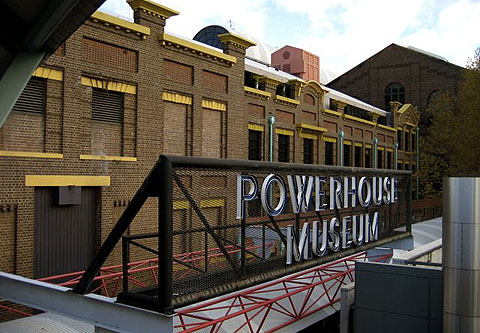
Powerhouse Tour 2011 Wrap Up


It was a beautiful sunny afternoon as 20 or so lucky library and museum enthusiasts gathered outside the Powerhouse Museum waiting to be taken into through the Love Lace exhibition, the collection carefully housed in the basement, the research library and to sit down with Sebastian Chan, Head of Digital, Social and Emerging Technologies at the Powerhouse. 

 One of the many interesting experiences of the day was the chance to play with the QR (quick response) codes embedded in the Love Lace Exhibition. If you have  never tried one of these QR codes it is basically a graphic representation of a URL that can be experienced with a smart phone. By downloading the Powerhouse app or using a bar code reader and then taking a photo of the graphic, the user is directed to a web site related to the resource, in this case further information about the piece and the artist. 


We then ventured into the basement to see so many wonderful pieces held by the museum. Everything from toys to dresses to clocks to medical equipment. Every drawer revealed another treasure. The above shoes were originally created for adult women who practiced the custom of foot binding. 


After the basement we toured the Research library and discovered the wide range held in this bursting-at-the-seams library. The Research Library has recently started using Koha, the open source ILS out of New Zealand and have experienced great results. 

We ended our day sitting down the Seb Chan.  He shared his insights into how the Powerhouse is using social media with the upcoming Harry Potter exhibition, the balance museums face trying to justify both the physical and virtual spaces and how an online presence can provide a follow up experience after a visitor leaves the Powerhouse. 

All in all it was a very inspiring afternoon, a big thank you goes out to the team at the Powerhouse for being so generous with their time and knowledge. If you missed out on this tour keep watching the ALIA Sydney blog for more opportunities. 

There are  many, many more images in the ALIA Sydney Flickr photo stream


Amy Barker, ALIA committee member tweets @unlikelylibrary 


Wednesday, 3 August 2011

An afternoon behind the scenes at the Powerhouse Museum


We're so excited about our peek into the inner workings of the Powerhouse Museum.  Whilst numbers were strictly limited so many of our community had to miss out, our lovely committee member Amy Barker will be documenting the day so we will be sharing some of the fun. So to get everyone in the mood, I wanted to share the exciting program our kind hosts have put together for us. 

Firstly, we will be taken by curators Erika Taylor and Geoff Barker on a tour of the basement of the museum and I am curious to see what gems they choose to show us. The Powerhouse does offer public basement tours from time to time but usually with a focus on a particular collection, I love the mystery element of this tour.  

Then they are taking us upstairs to the have a look at the latest Powerhouse exhibition Love Lace, which only opened 5 days ago, to have a look at the App they developed especially for this collection, to enable visitors to connect to more information through QR codes. "This App works as a companion exhibition catalogue in your pocket." They've asked those of us with iphones to download the app before we come so they can show us what it can do. 

We will then be delivered to the Powerhouse Research Library where the librarians will be discussing and demonstrating their new Koha open source library catalogue. 

Finally, we will be having rest and a chat with Seb Chan, head of Digital, Social and Emerging Technologies, and his team. For those of you unfamiliar with their fabulous work, have a look at their blog Fresh + New(er) but their team does a lot of different things including building their fabulous apps and spearheading their data and digitisation efforts.  They are making huge strides towards digitising their vast collections and as a thank you ALIA Sydney will be donating a portion of our ticket price to the their digitisation project. If you think they are doing great work have a think about making a tax deductible donation as well. 

So I can't wait to see what tomorrow brings...

Tuesday, 19 July 2011

FINAL PLACES LEFT: ALIA Sydney Presents: Knowning Me, Knowing You


ONLY A FEW PLACES LEFT  so please RSVP to aliasydneygroup@gmail.com to ensure you don’t miss out.

Have you ever looked at the job ads and wondered how do you become the person who gets that job? And with so many jobs having generic titles these days, what are these jobs really about? 

Come together to widen your library circle and hear a bit more about of those jobs you've always wondered about. Our discussion leaders will share their stories and then it is your turn to bring out your networking skills and get to know the people around you as we open some great topics up for discussion and you can find out all about those great jobs you never knew even existed. 

Featuring:
·         Larissa Reid, Reader Services Librarian, Law Courts Library
·         Jo Croucher, Digital Library Services, UNSW Library
·         Bernard de Broglio, Internet Coordinator, Mosman Council
·         Shardee Hoff, Facilities Coordinator, Shine Media
·         Vikki Bell, Freelance Researcher, Bellinfom Research
·         Leonie Smallwood, Library Programmes Coordinator, City of Sydney


Monday 25th  of July  2011 6:30-8:00pm (arrive from 6pm)
Upstairs, City Hotel, 347 Kent St (cnr of King St) Sydney City, 2000
Cost: $5 for ALIA Members / $7 for Non-ALIA Members (Pay at the Door)

Sunday, 10 July 2011

Knowing Me, Knowing You: Final Discussion Leaders Announced

 We are pleased to confirm that in addition to the talented: 
  •  Larissa Reid : Reader Services Librarian : Law Courts Library
  •  Bernard de Broglio : Internet Coordinator : Mosman Council 
  •  Jo Croucher : Digital Library Services : UNSW Library     
our next event Knowing Me, Knowing You will be featuring: 
  •  Shardee Hoff : Facilities Coordinator : Shine Media
  • Vikki Bell : Freelance Researcher 
  • Leonie Smallwood : Library Programmes Coordinator : City of Sydney 
Numbers are strictly limited so please RSVP to aliasydneygroup@gmail.com to ensure you don’t miss out.

Haven't heard about this event yet? Details are below: 

Have you ever looked at the job ads and wondered how do you become the person who gets that job? And with so many jobs having generic titles these days, what are these jobs really about? 

Come together to widen your library circle and hear a bit more about of those jobs you've always wondered about. Our discussion leaders will share their stories and then it is your turn to bring out your networking skills and get to know the people around you as we open some great topics up for discussion and you can find out all about those great jobs you never knew even existed. 
Monday 25th  of July  2011 6:30-8:00pm (arrive from 6pm)
Upstairs, City Hotel, 347 Kent St (cnr of King St) Sydney City, 2000
Cost: $5 for ALIA Members / $7 for Non-ALIA Members (Pay at the Door)


Tuesday, 5 July 2011

ALIA Sydney Presents: Knowing me, Knowing you


Have you ever looked at the job ads and wondered how do you become the person who gets that job? And with so many jobs having generic titles these days, what are these jobs really about? 

Come together to widen your library circle and hear a bit more about of those jobs you've always wondered about. Our discussion leaders will share their stories and then it is your turn to bring out your networking skills and get to know the people around you as we open some great topics up for discussion and you can find out all about those great jobs you never knew even existed. 

Featuring:

 Larissa Reid : Reader Services Librarian from the Law Courts Library
 Bernard de Broglio : Internet Coordinator from Mosman Council
 and Jo Croucher : Digital Library Services from UNSW Library     

With many more talented discussion leaders to be announced in the coming weeks.


Monday 25th  of July  2011 6:30-8:00pm (arrive from 6pm)
Upstairs, City Hotel, 347 Kent St (cnr of King St) Sydney City, 2000

Cost: $5 for ALIA Members / $7 for Non-ALIA Members (Pay at the Door)


Numbers are strictly limited so please RSVP to aliasydneygroup@gmail.com to ensure you don’t miss out.

Saturday, 2 July 2011

A Big Thank You to Everyone!


After a day of rest, I just want to say a big thank you to everyone who contributed to helping ALIA Sydney blog everyday in June. This includes our many fabulous guest bloggers from all over the world, the amazing Katrina McAlpine for coordinating the event, all of our committee members who contributed and helped keep things on track and of course, all our dear readers. Thank you all out there for your comments, sharing our content and being the reason ALIA Sydney exists. 


As we officially move into the second half of June we have 5 exciting new events planned which will be all advertised right here on our blog first and the blogging won't stop either as we  plan to continue to bring you plenty of original content from librarians and information, doing their thing right around the world. 


Stay Tuned. 


Kate Byrne


Convenor, ALIA Sydney

Sunday, 26 June 2011

Technology, puffins and the endless sun

I would like, if I may, to take your mind away from the technology theme of this month’s blog. I’d like to invite you to join me up north, where I’m writing this submission from a land where the sun doesn’t set. I’m in northern Iceland, and have been travelling around the region for the last month. I’ll be honest: libraries have not been the first thing on my mind, but I was intrigued by (and found time to visit) the Faroese National Library, so I’d like to tell you a little about it.


The Faroe Islands are a collection of 18 islands that lie halfway between Norway and Iceland. Just under 50 000 people live there, almost 20 000 of which live in or around the capital of Tόrshavn (pronounced “tor-shorn”). The Faroes are a self-governing region of Denmark, and it’s an area that holds its independence tightly – they have their own parliament and flag, and have not joined Denmark as a member of the European Union. The Islands are stunningly beautiful, remote, and absolutely covered in sea birds and a few very determined sheep.

The Faroese National Library is in Tόrshavn, and the Executive Director, Erhard Jacobsen, was kind enough to spend some time talking to me about his world.
The National Library also serves as the university library to the University of the Faroe Islands, the only university in the region. There are 15 public libraries spread throughout the Faroes, but some of these are so small they are only open a few hours a week. So in reality, the National Library is the only widely accessible library for many of the Faroese people.

Residents have access to a book delivery network, as well as interlibrary loan which tends to be sourced from Denmark. Erhard told me that while pretty much everyone in the Faroe Islands has internet access, the Library’s online resources are limited to a few databases purchased for the use of the university.
The Faroese are rightly protective of their culture and language, but the National Library has struggled to acquire or develop Faroese online resources. The small population limits the commercial viability of such resources. Erhard tells me that his biggest priority for the coming year is to champion the role of the Library in creating, describing, storing and distributing digital resources. Librarians in the Faroes really struggle to get this issue on the government’s funding agenda.


And what is it like to be a librarian in the Faroes? There are about 30 people working in libraries, not all at a professional level. (When I asked Erhard if they all knew each other, he replied “Of course!”) But one cannot study to be a Faroese librarian – the nearest library school is in Denmark. Individuals will usually do their degree either in Denmark or by distance study through a Danish university, then return to the Faroes to build their understanding of Faroese cultural, literary and administrative history. Anyone working in a Faroese library would have to be fluent in Faroese, Danish and English – but then, almost every Faroese person has that as a minimum.

I was struck by the extent to which the Library has to balance the big picture priorities that are taken care of by national and state libraries that we’re familiar with – things like ensuring equity of access, struggling to make government publications available – with the more immediate concerns of almost every library. Erhard is full of ideas – he’d like to change the layout of the library to allow for flexible study spaces for students; they are exploring the concept of “lending a librarian” to researchers to review their work; they would like to expand information literacy training for the whole population. But the fact is that they are a small library, and they have to make difficult decisions about priorities. Erhard was honest when he told me that libraries in the Faroes, including the National Library, were not heavily used by clients, but tended to direct most of their resources to preservation, collection, and technical services. In a time when customer service is king in many Australian libraries, I found it interesting to see an environment where preservation was considered more important. After all, if they don’t preserve the cultural history of this tiny region, who will?

Like me, I’m sure you’ve read this and found a lot familiarity in the circumstances of the Faroese National Library. And you’re right – this is a first world country that, while still struggling with issues like resource allocation and cultural preservation, doesn’t have to worry about other basic things denied in some libraries around the world: a safe place to work, basic human rights, etc. But we don’t have to compare ourselves to the far extreme to place our work in context, and I found it comforting seeing the sense of responsibility Erhard felt for the collection and promotion of Faroese cultural resources. I hope that they are able to undertake the digitisation projects that they are dreaming of, as I’d love to see these resources more widely available.

If you’d like me to tempt you to visit this part of the world, just have a look at the stunning scenery here. Erhard and the other staff at the National Library were very gracious with their time and allowing me to take the attached photos – Erhard asked me to send him a link to this blog, and I’m sure he’ll be eager to read any comments you’d like to post.

Alyson Dalby is  the NSW State Manager for ALIA. 

Wednesday, 22 June 2011

Internet Based Non State Actors And Their Potential Affect Upon Digital Archives

Lately Iʼve been mulling over the significance of Internet Based Non State Actors and
their potential affects upon Internet accessible archives, mostly due to the new star on the
scene, Lulz Security, aka LulzSec. For those of you who havenʼt heard about their recent
exploits theyʼve included disabling, hacking, and obtaining data from a number of high profile
targets due to their sociopolitical stands or just plain fun. These have included corporations,
governments and non-profits such as the Central Intelligence Agency (CIA), InfraGard, the
National Health Service (NHS), Nintendo, the Public Broadcasting Service (PBS), Sony, and the
US Senate to name a few.

What is an Internet Based Non State Actor? In fact there isnʼt really a proper term for
them since some schools of international relations do not account for them at all, since Non
State Actors of any kind do not fit into the Westphalian State Model. On the other hand newer
models that do recognize Non State Actors (NSA) lack a category that really fully describes
internet based groups such as Annonymous, LulzSec, Wikileaks, etcetera, since these groups
shift their focus continually, while simultaneously exerting both soft and hard power upon
multinational corporations, traditional nation states and international relations. These groups can
be at times categorized as Violent Non-State Actors (VNSA) yet simultaneously can carry the
traits of a Nongovernmental Organization (NGO). This issue of taxonomy will likely be further
explored in the coming years as traditional state power continues to erode and droves of
academics delve into archives, libraries, and online databases to come up with a multiplicity of
answers.

However, my original question is more hypothetical in nature; how will these Internet
Based Non State Actors or IBNSAs affect digital archives that are accessible over networks?
Centralized libraries have not always faired well throughout history with the burning of the
Library at Alexandria, the Fourth Crusadeʼs destruction of the Imperial Library of Constantinople,
or the Hanlin Academy Libraryʼs damage during the Boxer Rebellion. Centralized digital
archives really fair no better and possibly worse since physical proximity is no longer required to
destroy, damage, or pillage a collection of servers housing an archive and if anything has also
added an element of surprise in favor of an IBNSA or sole individual that might want to inflict
damage.

Decentralized and distributed models may prove a harder target as they spread risk
around, since not all the data is stored in a central location or if it is, it is replicated and
distributed in a fashion that is geographically decentralized. However, this does not fully isolate
or remove vulnerability, especially since interconnects between the nodes, in decentralized and
distributed networks, can act as gateways of attack once one node is compromised. At the very
least this can disrupt the confidence of a decentralized or distributed digital archive per this
discussion, which may not be that dissimilar to the recent hack and compromise of the Mt. Gox
Bitcoin Exchange, which tanked the value of the distributed peer to peer currency known as
Bitcoin.

With the rise of NSAs and the yet to be categorized IBNSAs, in a post state globalized
and network centric world, we also have an explosion of varying and unpredictable agendas that
can be exercised with a certain amount of impunity. These entities may or may not view the
content of archives and libraries as sacred as they may not hold data, information, or knowledge
to their liking and thus become targets, which is not something uncommon in human history. Of
course they may also just do it for the Lulz. In any case as we continue to bite and scratch over
exactly how archives and libraries should be digitized and made available to the world via the
Internet, remember it might be worth keeping a few of those physical copies around just in case.

Emery Martin is an Artist, Educator, and Techie currently based in LA and teaching at CalArts: School of Film/Video. http://emerymartin.net/


Tuesday, 21 June 2011

Behind the Scenes at the Powerhouse with ALIA Sydney


In response to popular demand ALIA Sydney is so pleased to announce that we have arranged a very special behind the scenes tour of the Powerhouse Museum. 


In this very special half-day tour, on Thursday August 4th: 12:30 - 4:30pm, we will be going behind closed doors, including a visit to the archives, the library and a one and a half hour exploration of the Powerhouse Museum's basement. We will cap off the day with a talk from Seb Chan's Digital, Social & Emerging Technologies team. 


ALIA Members $10, Non-Members $15


Spaces are very limited so it is important you RSVP as soon as possible so that you don't miss out.  To RSVP please email aliasydneygroup@gmail.com with your name and contact phone number. 


NOTE: (24 June 2011) This event is now SOLD OUT. Thank you all for your support and interest. 

Monday, 20 June 2011

The Role of the Subject Specialist Librarian

There are many different aspects of an academic librarian’s role. Collection development includes making decision on monograph and serial purchases, database subscriptions and the cancellation on resources. Reference is probably the most recognised role being the “Help” for people finding it difficult to locate what they need. This help can often vary from “how do I photocopy?”, “my internet connection doesn’t work”, to a quick location of a resource and in depth strategic resource searching. Liaison or outreach roles can incorporate collection and reference skills on a higher academic staff level. We are also faced with new challenges in the competitive tertiary environment assisting faculties with demonstrating impact within their discipline through various bibliometric measures and citations tools. 

So as librarians how do we learn to be an expert in all these areas on top of subject specialisation? Should librarians have a 2nd degree in a specialised area to be able to help people at a tertiary and research level and how often would this knowledge be used? This subject expertise may be beneficial for assisting research students with high level needs and thesis references, academic staff with their specialised research as well as identifying the most relevant resources for a running course at an undergraduate and postgraduate level. On the other side of this, general search strategies and skills are required more than specialised expertise when on a reference desk or help area when you have students and library users from all subject areas asking for assistance. 

These information needs could possibly be met with identifying key general strategies that could be communicated and implemented through online information literacy tutorials, resource guides and subject guides. With the detailed creation of these guides and strategies it may be possible for library users from various disciplines to delve into any resource effectively. This may create a new role for the subject specialist librarian to have an in-depth knowledge of databases and to be able to appropriately understand, document and communicate resource specific intricacies. Is subject expertise really required for this role or does it require knowing the functionalities of specific databases, in turn making the subject specialist redundant?

So do we need to be subject specialists in University Libraries? Perhaps we have come to a point where more importance lies in knowing and understand the changing nature of our resources. This includes e-journal, e-books, databases, and the fast developing computer and mobile technologies and not forgetting the still very present and popular print material. As professionals this may be enough for us to build our collections and disseminate to our library users effectively. I have posed many ideas which would be interesting to gain feedback on. How are our current librarian roles developing? What training is required to build these skills and knowledge?

Bruce Munro is an ALIA Sydney committee member

Tuesday, 12 April 2011

ALIA Sydney Presents: Mal Booth

Mal Booth has had an unconventional path into library senior management and shared some of the things he has learnt along the way at our recent event, How to Become a Library Senior Manager in 12 Easy Steps. To hear what he had to say, click here for a Sound Recording of Mal Booth. Mal has also uploaded his slides over at his blog, From Melbin. 

ALIA Sydney Presents: Grazyna Tydda

Unfortunately we had some difficulties with some of the video footage of our recent event How to become a Library Senior Manager in 12 Easy Steps. However all is not lost, click here for a Sound Recording of Grazyna Tydda.  Grazyna showed us her path from historian to librarian and gave us some insights into what it is like behind the scenes at the State Library of New South Wales. 

Sunday, 10 April 2011

ALIA Sydney Presents: Andrew Wells

Andrew Wells informed and entertained at our recent panel, How to Become a Library Senior Manager in 12 Easy Steps. A big thank you to Andrew for sharing his experience with us all. 

ALIA Sydney: How to become a Library Senior Manager...


A big thank you to all of our speakers, (left to right: Mal Booth, Grazyna Tydda, David Sharman and Andrew Wells) who did such an amazing job at the recent ALIA Sydney event: How to become a Library Senior Manger in 12 Easy Steps. We were so pleased the event sold out and the positive feedback has been overwhelming. 


Thank you also to UTS Library for kindly hosting our event.