Showing posts with label libraries around the world. Show all posts

Friday, 20 November 2015

Four libraries of Ireland and what they can teach us…


It’s no surprise that a country home to literary greats like Oscar Wilde and James Joyce should have some amazing libraries. I’ve just returned from a trip to the library land of Ireland having chronicled a list of my favourite Irish libraries and what they can teach us here in Australia.


The old Library, Trinity College

The Old Library at Trinity College features consistently on lists of the greatest libraries in the world. This is because it is enchanting. The Old Library has a hushed reverence that draws thousands to its quiet halls, wandering among the rows and rows of antiquated tomes.


The Old Library can teach us two things. Firstly, it is a legal deposit library and it highlights the importance of keeping legal deposit books in an archive for future generations to enjoy. Secondly, the Old Library is living evidence that people still love libraries and still love books on shelves. The day I visited lines of people stood waiting in the rain just to catch a glimpse of its Book of Kells, an illuminated manuscript of the four Gospels thought to have been created in c. 800. In the halls of the Old Library cameras and iPhones snapped away but even amid modern technology this library with its shelves and shelves of books remains timeless.


Marsh's Library

Marsh’s Library is the oldest public library in Ireland. This library taught me the value of unexpected libraries and that meaning can be found in things we might think are irrelevant or foolish. Marsh’s Library is like something from a Halloween story with shelves full of heavy tomes and creaking floorboards. But here I found a library embracing the present as much as the past. The library even has its own Facebook page!


When I visited Marsh’s Library they were holding an exhibition of marginalia, sketches and notes written in the library books that readers have added over time. Titled The Unicorn and the Fencing Mouse, after a sketch depicting both, this exhibition featured annotations made by hand in medical texts and other volumes. I loved the quirky, unexpected nature of this exhibition. It gave meaning to what might otherwise be considered trivial notations, even graffiti.


Chester Beatty Library
The Chester Beatty Library is part of Dublin Castle and houses religious and secular manuscripts dating from 2700 BC. This library also awakened me to the role humour can play in libraries. One of their many exhibitions was titled “Wicked Wit” and depicted the use of political cartoons in documenting relations between Ireland and Britain. This collection of cartoons reminded me of the potential for libraries to key into historical humour in their exhibitions. Our exhibitions can be entertaining and light-hearted as well as informative.


Another lesson I learnt from the Chester Beatty Library is how libraries can be embracing of all religions. In the exhibition galleries excerpts from the Quran went hand in hand with exhibitions about Christianity, proving that libraries truly are pluralistic institutions.

The National Library of Ireland

The National Library of Ireland taught me the value of genealogy as a way for people to piece together narratives of the past. The Library has featured internationally as a recommended tourist destination for genealogists. This is because of the rich and varied history it preserves, including the Library’s unique set of Catholic parish registers. The National Library of Ireland also has a significant manuscripts collection which includes such gems as letters of Oscar Wilde and the papers of Irish poet, W. B. Yeats.


Visiting the Genealogy Advisory Service in this library impressed upon me how family history research is intrinsically tied to our social histories so that a name on a census can tell you about gender relations or economic status. It reminded me of the social and historical importance of the detailed family histories our clients are compiling in libraries every day.


Anne Reddacliff @AMoodiLibrarian

Event Officer, ALIA Sydney


Sunday, 21 June 2015

Blog Every Day in June Day 21: Libraries and Liberties

 Day 21 of Blog June!

Today's post is from Eleanor Gerrard, ALIA Sydney's event officer. 

As we have all seen many times, libraries are crucial to to the continued education of people, development of society, and preservation of our histories and culture. But what about in countries that are still developing, where education, history and culture is oppressed, and where democratic freedoms have not always exercised?

The University of Technology Sydney’s Cosmopolitan Civil Societies blog has written about the important role that public libraries have played in the development of democratic societies in Africa. Considering that ‘African knowledge about Africa is swamped by Western knowledge about Africa’, it is more important than ever for African countries to establish their own information collections that are independent to the West, and a true reflection of that country’s heritage so that it cannot be lost.

The article also points out how libraries can play a vital role in educating women and girls in the region, which has been proven to ‘lead to poverty alleviation, to the development of active citizens and to the creation of a more open and democratic society.’

Read more from the Cosmopolitan Civil Societies blog to find out about how the establishment of libraries can have a positive impact on developing democratic societies: http://cosmopolitancivilsocieties.com/2014/02/28/libraries-and-the-development-of-democratic-societies/

Eleanor Gerrard

Event Officer, ALIA Sydney

Follow Eleanor on twitter!

Saturday, 25 April 2015

A visit to Cagayan de Oro City Library


Recently, I went to Cagayan de Oro in the Philippines to visit family over Easter, and I was lucky enough to spend some time in the local public library. As a recent graduate in both information studies and international studies, I have a special interest in the differences and similarities in library services between Australia and other countries. I was eager to use part of my trip to explore all the libraries in the local area, though due to a strict dress code (no shorts or short-sleeved t-shirts allowed!) I was unable to visit the adjacent Xavier University Library in addition to the public one.


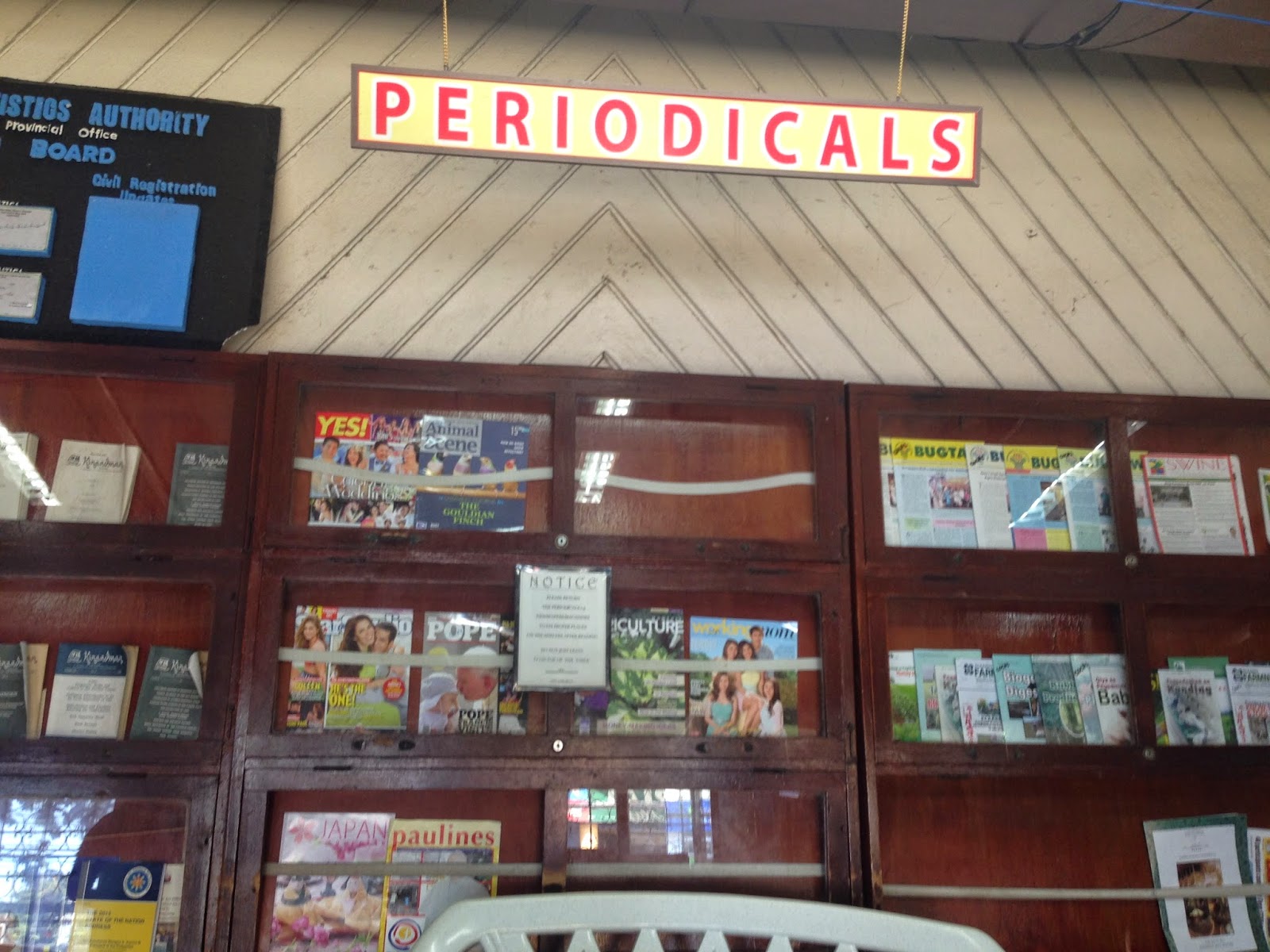
Cagayan de Oro City Library is situated in the heart of the city, and offers community access to research materials, periodicals, online services and printing, and a collection of fiction and non fiction materials for both children and adults. Considering it is only a small library, I was impressed by the size of the children’s book collection, offering both fiction and learning materials specifically for primary aged children. The room was also well set up for conducting children’s activities and classes, with desks, a whiteboard, CD players and televisions. Unfortunately, no classes or activities are running at this time due to a lack of funding. 

 The Children's room 

The periodicals at CDO Library 


I was also interested in the Filipiniana Reference section, which offers members of the public the opportunity to research both local and national history from a rather diverse collection. As the Philippines is officially bilingual, the local library offers texts in the local dialect of Cebuano, the national language of Tagalog and in English. Having volunteered for about four months at Hurstville City Library in Sydney - another local library with an ethnically and culturally diverse community -  I have come to really appreciate the value of multilingual services in providing information access and creating a stronger and more inclusive local community. The inclusion of different language texts, and the Filipiniana Reference section, all point towards the library’s commitment to providing information access across all language barriers in the local area.

CDO’s Filipiniana Reference section

CDO Library Computers
While in the library, I spoke with the technical librarian Darlaine about the future of Cagayan de Oro library and what changes she would like to see moving forward. Darlaine would like to reach out more to members of the public by offering classes and services, especially to those who don’t have access to computers, books or other education materials. She would especially like to organise a summer storytelling program for young children, since schools in the Philippines has long summer breaks between April and June. She also would like to gain more sponsoring in order to gain more computers, since public access to the internet is a priority in Cagayan de Oro City.


 For me, the experience of visiting Cagayan de Oro City library has further reiterated the importance of libraries in bringing literacy and technology programs to the community. Australian libraries are very lucky to be able to fund a diverse range of programs, such as the ones I have seen as a volunteer for Hurstville City Library in Sydney. I would like to see Darlaine and the other librarians in Cagayan de Oro achieve their goal of raising funding for these types of programs in the future. 

Darlaine, technical librarian at CDO library

Darlaine is hoping to attend the Tech 4 Ed conference this year, which is tied with the American Library Association. If selected by a committee, she will complete training beforehand at the  National Library of the Philippines in Manila. I wish her all the best!


Eleanor Gerrard
Event Officer, ALIA Sydney